

Posted by Wicked Fabrics - Vivi Richards on 15th Feb 2024
A Guide to Fold-Over Elastic: Trendy Uses and Sewing Hacks
If you’ve been sewing for a while, chances are fold over elastic has crossed your path. Maybe it came tucked inside a pattern envelope. Maybe you spotted it while browsing elastics and thought, I should probably learn how to use that one day. Or maybe you already rely on it weekly and still feel like you’re only scratching the surface.
Either way, fold over elastic (FOE) is one of those good-to-have of the sewing world. It’s small. It’s flexible. It doesn’t ask for much. And once you really understand how to use it, it quietly upgrades your makes in ways that feel polished, practical and intentional.
Most sewists reach for FOE because they want a clean, stretchy finish that holds up to real life. Kids’ clothes that get pulled on and off daily. Underwear and activewear that need to move with the body. Baby garments that need to be gentle against the skin.
We want edges that don’t dig in, don’t warp, don’t fray and don’t scream “homemade in a bad way”.
That’s where fold over elastic steps in.
What fold over elastic actually is (and why it works so well)
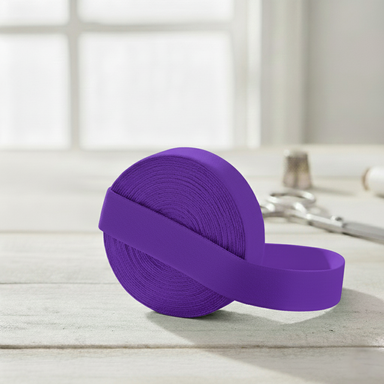
FOE is a flat elastic with a visible centre crease running along its length. That crease is your guide. It allows the elastic to fold neatly over a raw fabric edge, encasing it while still stretching comfortably.
Unlike traditional elastic, FOE becomes both the finish and the function. No turning, no casings, no extra bulk. Just one tidy pass and you’re done.
It also comes in a huge range of colours and finishes, which means it doesn’t have to disappear into the background. It can quietly blend in or confidently stand out. Your choice.
Here’s what we see all the time. FOE gets reserved for one specific purpose, usually underwear or baby knits. Or worse, it gets avoided because it feels fiddly, inconsistent or easy to stretch out by accident.
When FOE is pulled too tight, it can wave or distort fabric. When it’s not stretched enough, it can gape. And when you don’t realise how versatile it actually is, you miss out on a lot of creative and practical uses.
So let’s fix that.
The action: using fold over elastic with intention
Once you stop thinking of FOE as “just elastic” and start treating it like a design tool, things shift.
Here are some of my favourite ways to use it.
Garment edging
FOE is brilliant for finishing necklines, leg openings, armholes and waistbands, especially on knit garments. It adds stretch without bulk and feels comfortable against the body, making it ideal for underwear, swimwear, kids’ basics and sleepwear.
Hair accessories and headbands
Soft, stretchy and durable, FOE makes excellent headbands and hair ties. It holds without pulling and can be matched to outfits or seasons easily.
Bracelets and simple accessories
A strip of FOE, a knot or clasp and you’ve got a quick wearable that’s great for gifts or markets. It’s also a fun way to use up shorter lengths.
Home aewing aolutions
FOE isn’t limited to clothing. It works beautifully for fitted sheet corners, slipcovers or anywhere you need gentle stretch without heavy elastic channels.
Activewear and movement friendly makes
Sports bras, leggings and yoga wear benefit from FOE’s ability to stretch and recover without feeling rigid. It moves with the body instead of fighting it.
Sewing hacks that make FOE even better
Replace tired elastic in fitted sheets with FOE for a snug, refreshed fit without bulky seams.
Need a fast project? Tie FOE into loops for no sew headbands that last.
Use FOE as stretchy bookmarks that won’t damage pages and stay put.
Swap stiff straps on garments or bags for FOE to add comfort and flexibility.
Keep a small stash for quick fixes. Loose sleeves, stretched socks, minor fit adjustments. FOE can save a garment from the donate pile.
The result: cleaner finishes, more confidence, less waste
When you understand fold over elastic, it stops being intimidating and starts feeling empowering. You waste less fabric. You finish edges more cleanly. You create garments that feel better to wear and hold up longer.
And from a sustainability perspective, that matters. Small details that extend the life of a garment make a real difference over time.
FOE might be a small notion, but its impact is anything but.
So next time you’re planning a make, pause before defaulting to your usual elastic. Consider whether fold over elastic could do the job better. Chances are, it can.
And once you start reaching for it intentionally, you’ll wonder how it ever felt optional.